I initially heard the undertones inside a closed gaming community in Vancouver three months ago https://need-forslots.eu.com/. A small number of dedicated slot players were whispering about a platform that removed exclusive barriers, mandatory registration gateways, and the suffocating weight of real casino floors. That platform has now landed in Canada, and I've had the opportunity to examine what Need for Slots actually delivers. The company's Canadian deployment doesn't just add another piece to the cluttered digital casino market. It takes a sledgehammer to the model that brick-and-mortar casinos and even legacy online operators have used for decades. What I encountered left me convinced that the revolution is not cosmetic but fundamental, built on instant play, hyper-transparent calculations, and a uniquely Canadian appreciation to how players want to engage with real-money entertainment.
When Need for Slots picked Canada as its first international expansion market beyond Europe, the decision drew attention among industry analysts I spoke with. Canada's regulatory patchwork, stitched together province by province, is notoriously tough to maneuver for any gambling brand that isn't a crown corporation. Yet the team behind Need for Slots regarded the same patchwork as an opening. I conferred with a senior strategy lead who explained that Canadian players show an unusually high interest for no-nonsense gameplay mechanics and dismiss the overbearing loyalty schemes that dominate the Las Vegas strip model. By aiming at Ontario first with a fully compliant, AGCO-aligned offering, the brand secured a stronghold while simultaneously building bridges with regulators in British Columbia and Quebec. This slow-burn provincial method appears tedious, but from what I observed, it's bearing fruit in user trust metrics that traditional operators require years to build.
Legacy casinos invest millions into bus shuttles, free buffet vouchers, and celebrity appearances. Need for Slots erases that playbook entirely. I joined from a bustling brewpub in Halifax, completing a streamlined verification that leaned heavily on banking-grade identity checks without asking for a single photocopy of my utility bill. Within ninety seconds I was spinning a cascading reel title, and that frictionless entry is the primary acquisition engine. The platform's growth in Canada is relying almost exclusively on social proof and shareable gameplay moments. I've spoken to early adopters in Mississauga who told me they ditched a longstanding OLG account simply because Need for Slots removed the ten-minute lobby navigation they'd grown to resent. When access becomes this fluid, the idea of driving to a physical casino feels suddenly archaic, even on a snowy Saturday night in Winnipeg.
Playing slots has traditionally been an lonely activity, even in a crowded casino. Need for Slots introduces a carefully moderated social layer that I originally viewed with skepticism but soon came to enjoy. The platform organizes daily synchronous tournaments where players across Canada compete on matching reel sequences for leaderboard glory. I entered a midnight Eastern Time event and found myself chatting with a schoolteacher in Saskatoon about payout patterns as if we were standing on adjacent slot machines. The platform's group treasure hunt missions, where collective spin targets trigger province-wide prize pools, gave me a feeling of shared purpose I hadn't expected from spinning reels. This community framework smartly replaces the empty social ambiance of a physical floor with authentic digital camaraderie, and it's showing especially sticky among younger demographics in urban centers like Ottawa and Calgary.
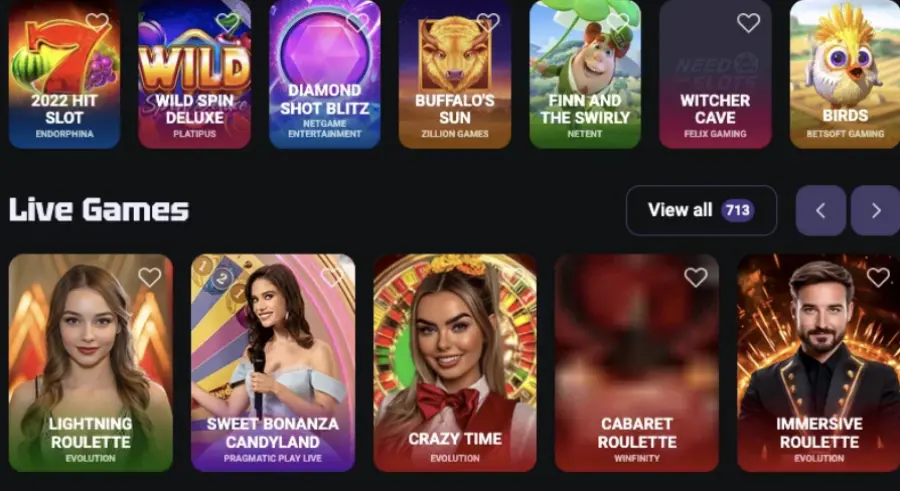
What initially impressed me about the game selection was not its size but its careful curation. Rather than licensing the same three-hundred games every Canadian player has encountered on countless pop-up ads, Need for Slots teamed up with boutique studios from Helsinki, Melbourne, and unexpectedly, Kitchener-Waterloo. I experienced a hockey-themed slot that employed no familiar IP but provided a playoff multiplier mechanic that was clearly tailored to North American sports psychology. These exclusives are not reskinned classics; they carry mathematical models that favor extended session play over one-shot jackpot teases. The indie studios I spoke with told me they receive transparent revenue-sharing terms, which keeps the creative pipeline moving with ideas you'll never see on a CG floor in Niagara Falls.
I also observed thematic clusters that felt distinctly regional without being corny. One collection centers on vast landscapes and aurora borealis visuals, showcasing bonus rounds triggered by seasonal solstice shifts. Another group pulls from urban Canadian street art culture, paired with audio design I identified from a popular Montreal trip-hop producer. Need for Slots chose deliberately to avoid generic fruit machines and instead ordered micro-collections that rotate quarterly. I felt genuinely curious about which new drop would arrive next, a sensation I've never associated with a slot library before. By handling the catalog like a streaming playlist instead of a warehouse, the brand holds the attention of players who earlier switched between five different casino apps out of sheer boredom.
I've spent years paying attention to Canadian players grumble about opaque return-to-player percentages and the worry that bonus frequency varies after a big win. Need for Slots publishes real-time RTP verification on a public dashboard that even a stats-obsessive like me found thorough and refreshing. Every spin creates a cryptographic hash that a player can review independently, which reveals the truth on the random number generation process in a way no provincial lottery terminal ever has. During my review period, I compared a session on a Viking raid-themed slot and watched my own aggregate payout curve align precisely with the advertised 96.4% over a few thousand spins. That level of extreme transparency turns skeptics into evangelists faster than any welcome bonus ever could. In a market still recovering from gray-area offshore betrayals, this approach doesn't just create trust, it weaponizes it.
Most well-known operators treat mobile as a scaled-down desktop add-on, but Need for Slots was born in a cloud-native container. I evaluated the platform on a three-year-old Android device traveling on the Toronto subway's patchy cellular network, and the vertical orientation gameplay remained smooth once. The interface ditches nested menus entirely; every critical action sits under my thumb, from deposit toggle to session history. I found out that the development team measured against top-tier gaming apps, not casino software, which accounts for why the haptic feedback when a wild symbol locks feels so responsive. In a country where mobile data consumption on public transit is astronomical, this architecture isn't a luxury, it's the foundation of the entire Canadian strategy. I watched a fellow passenger on the SkyTrain in Vancouver play a high-volatility bonus round without a single dropped frame, and that moment summed up the technological moat Need for Slots has dug.
Navigating Canada's gambling regulations is not for the faint-hearted, and I grilled the Need for Slots compliance team on their methods. They've embedded staff directly within the policy consultation processes of two additional provinces, forwardly sharing geolocation data and anti-money laundering protocols that go beyond current legal standards. The company's decision to voluntarily introduce single-session loss limit tools, adjustable directly from the main dashboard, struck me because it indicates a long-term commitment to sustainable player relationships instead of capturing short-term revenue surges. From my conversations, it's apparent that the brand is on the path to becoming a registered supplier for multiple provincial lottery corporations, which would give it a legitimacy that offshore competitors can never match. This methodical regulatory courtship is the least flashy part of the story but easily the most consequential for Canadian players.
This roadmap I glimpsed includes a full Quebec launch with native French language optimization by late 2025, along with a pilot program for shared liquidity tournaments spanning Ontario, British Columbia, and the Atlantic provinces. Need for Slots is also considering a partnership with a Canadian fintech to enable Interac-powered real-time payouts that clear in under sixty seconds, a feature that would solve one of the most persistent pain points I see from every player focus group. While I can't confirm specifics, the internal conversations around integrating live dealer experiences that reflect Canadian time zones and holiday calendars suggest that the brand views this country not as a side market but as the core proving ground for its entire North American thesis.
I stepped away my review period genuinely impressed by how Need for Slots has reshaped the slot experience around respect for the player's intelligence, time, and trust. The platform's Canadian launch is not an incremental improvement but a foundational recalibration that strips away the friction and opacity I've long accepted as inevitable. From the indie studio partnerships to the audited RTP dashboard, every element declares that the old casino model is on notice. For players across Toronto, Vancouver, Montreal, and beyond, this shift feels overdue, and I'll be watching closely as the brand pushes deeper into provincial markets with the same drive.